What do protecting forests, fighting for climate, and upholding human rights have to do with each other? Everything.
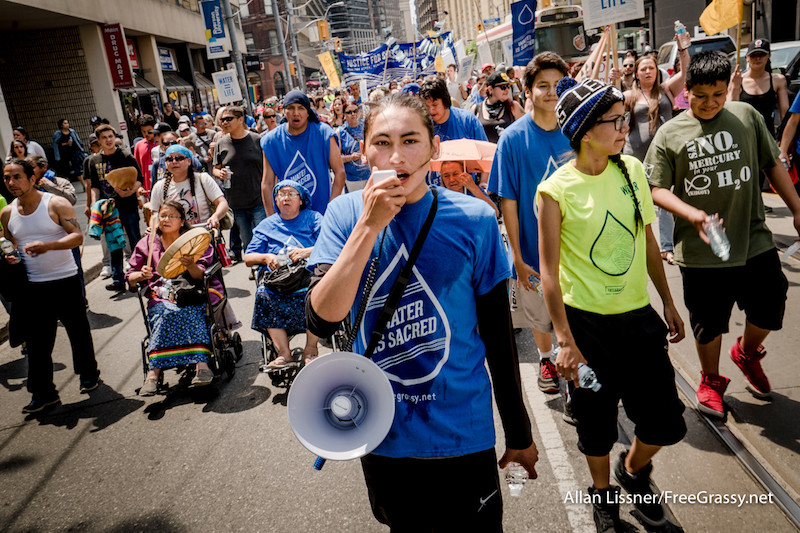
Around the world, Black, Brown, and Indigenous communities have been the hardest-impacted communities by fossil fuel and agricultural industries. Stolen lands, resource extraction, air and water pollution, and labor violations are just some of the environmental and human rights impacts corporations have on local communities. Racial justice and environmental justice are one and the same.
Here in the U.S., the biggest polluters set up shop in predominantly Black and Brown communities, putting folks’ health at grave risk, with disproportionate cases of cancer and asthma tied directly to local pollution. Pipelines are being built on Indigenous lands without tribal consent, bringing in ‘man camps’ that bring with them unprecedented disappearances and murders of young Indigenous women. Pipeline spills threaten toxic pollution of drinking water and food.
In Indonesia, communities’ lands are stolen and destroyed without their consent just as labor is stolen from the workers on the palm oil plantations that take their place. Plantation workers’ spouses and children are forced to work for free; under toxic conditions and under threat of violence if they speak up.
In the Amazon, fossil fuel companies like Chevron have forced Indigenous Peoples off of their lands, exposed them to Western diseases, and spilled toxic oil into the waters where they drink and fish. That same oil extracted from the Amazon arrives in the U.S. to be processed in refineries in Black communities like Richmond, CA or St. Gabriel, LA, better known as Cancer Alley.
And across the Amazon, Indonesian, and Congo rainforests, fires are being intentionally set to clear lands for big agribusiness: pushing out local communities, destroying livelihoods and homes, and exposing Indigenous Peoples to Western diseases and COVID-19.
Environmental justice is essential.
These are the people at the front lines of deforestation, climate change, and systemic racism. These are the communities that live with the highest environmental impacts of destructive corporations, and suffer the abuses of human rights that come with it.
When equality, equity, and the respect for basic rights are guaranteed for all human beings, only then can we guarantee the protection of rainforests and our global climate.
When human rights and environmental justice are fought for side by side, we not only ensure safer working conditions, strengthen community land rights, decrease pollution, and benefit from the ancient expertise of Indigenous peoples to manage rainforests, we also work to build a future that is just, equitable, economically viable and climate-stable.
Join us in Supporting Communities